
Custom Logo Design
A logo is used at sixteen pixels and at sixteen feet, in one colour on an invoice and reversed out on a shopfront. Clipping Path Center draws marks as vector from the first sketch, tests them at every size they will be used at, and transfers full copyright with the source files.
- Founded 2008 · 15+ years
- 150+ in-house editors
- Hand-edited, human QA
- NDA on every file
- No minimum order
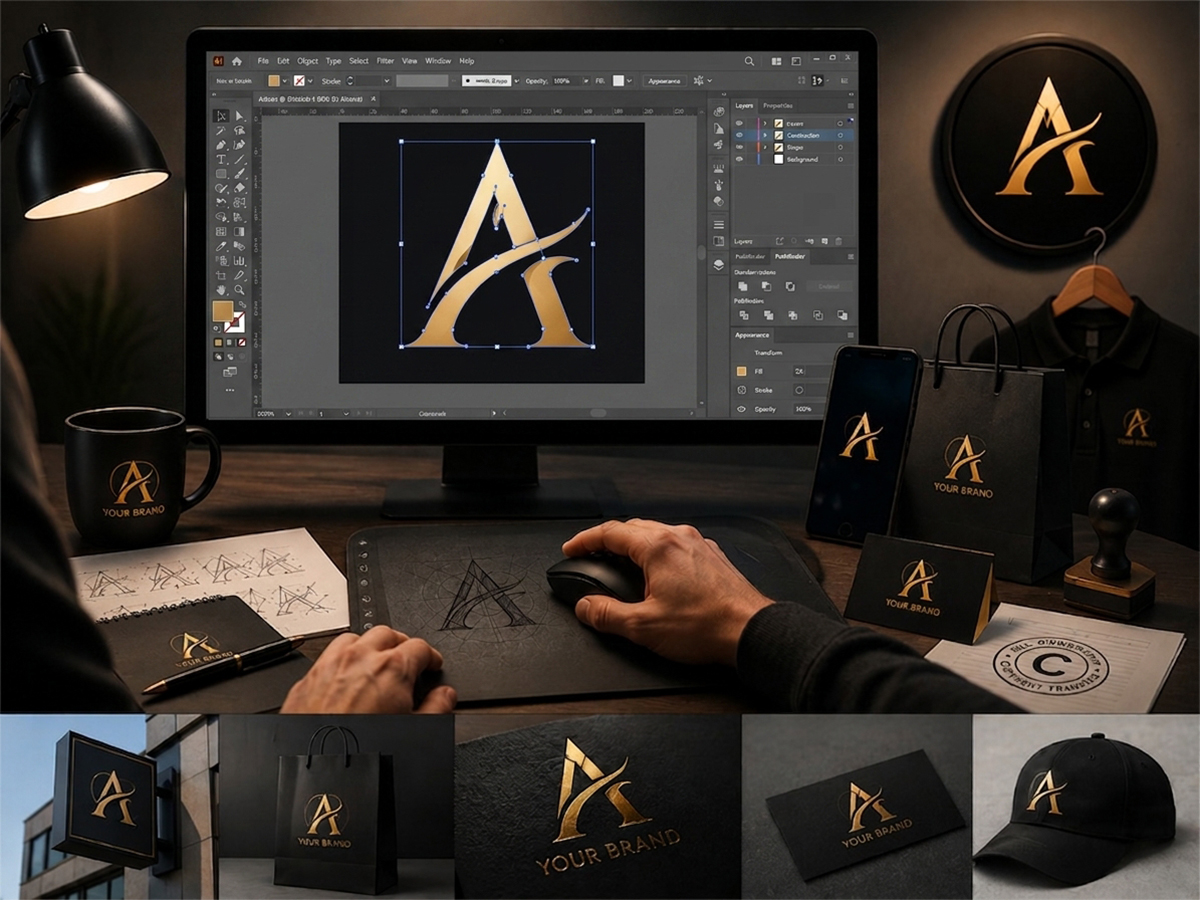
Logo design at Clipping Path Center: the specification
| Service | Custom logo design — original marks drawn as vector, with source files and usage guidance |
|---|---|
| Concepts | Multiple original directions presented, not variations on one idea |
| Revisions | Unlimited within the chosen direction, until the mark is right |
| Turnaround | First concepts within [number] working days; full delivery after sign-off |
| Price | From $29 per project, set by the scope agreed at brief stage |
| Files delivered | AI, EPS, SVG, PDF, plus PNG and JPEG at every size you need |
| Colour versions | Full colour, one colour, black, white and reversed |
| Layout versions | Primary lockup, horizontal, stacked, and an icon-only mark |
| Type | Outlined in the delivered files, with the typeface named and licensing stated |
| Ownership | Full copyright in the final mark transferred to you in writing on final payment |
| Usage sheet | Minimum sizes, clear space, colour values and what not to do with the mark |
| Confidentiality | NDA on every project; concepts are not published without your permission |
Specifications current as of 10 August 2026.
Vector from the first sketch
Marks are drawn as paths, not painted and traced afterwards. That is what lets one file serve a favicon and a building sign without a second version being made.
Tested at the sizes it will fail at
Every mark is checked at favicon size, in a single colour, and reversed out of dark. Most logos that fail in use fail in one of those three conditions.
You own it outright
Full copyright in the final mark is transferred in writing, with the source files. A logo you cannot register or modify is a rental.
What is a custom logo design service?
A custom logo design service produces an original brand mark and the file set needed to use it, rather than adapting a template or a stock icon. The deliverable is a family of files — several layouts, several colour versions, several formats — plus written guidance on how the mark is applied.
The word custom is doing real work in that sentence. A generated or template logo is not original, cannot reliably be trademarked, and frequently appears on another business in the same sector. An original mark is drawn for one business and its copyright can be transferred outright.
The technical requirement that shapes every design decision is scale. The same mark has to survive being sixteen pixels wide in a browser tab, printed in one colour on a delivery note, embroidered on a polo shirt where fine detail cannot be stitched, and reversed out of a dark background. A mark that only works at one size in full colour is not finished.
Custom design, template, generator and contest, compared honestly
These four are sold at wildly different prices and the differences are real. Here is what each one actually gives you.
| Route | Originality | Copyright you can transfer | Vector source files | Works at every size |
|---|---|---|---|---|
| Custom design | Original to you | Yes, transferred in writing | Yes | Designed and tested for it |
| Template or marketplace | Sold repeatedly | Licence only | Sometimes | Rarely tested |
| AI or logo generator | Generated from common elements | Usually unclear | Sometimes | Rarely |
| Design contest | Varies, and copying is common | Winner only, if the terms hold | Varies | Varies |
The column that costs businesses money later is copyright. A logo you cannot demonstrate ownership of is a logo you may not be able to register as a trademark, and that discovery usually arrives at the point where the brand has become worth protecting. If the mark matters, the transfer should be in writing before you start using it.
How Clipping Path Center designs a mark
Four stages. The brief stage is the one that decides whether the concepts are useful, so it is the one that takes the longest on your side.

Brief and competitive context
Before anything is drawn we establish what the business does, who it sells to, where the mark will appear, and what every competitor in the sector already looks like. That last part is practical rather than academic: sectors converge on visual conventions, and a mark that sits in the same territory as four competitors will be mistaken for them.

Original concepts, genuinely different
Several directions are presented, each a different idea rather than a recolouring of the same one. Concepts are drawn as vector from the start and shown in black on white first, because colour hides a weak mark. If a direction only works in its presented colourway it is not a direction.

Refined against real use
The chosen direction is refined through unlimited revisions and tested where logos actually fail: at favicon size, in one color, reversed out of a dark background, and simplified for embroidery. Detail that disappears at sixteen pixels is removed rather than defended, and spacing is optically adjusted rather than mathematically centred.

The full file set and the rules
Delivery is the whole family: primary lockup, horizontal, stacked and icon-only; full colour, one color, black, white and reversed; AI, EPS, SVG, PDF, PNG and JPEG. The usage sheet states minimum sizes, clear space, color values in every model, the typeface and its licensing, and what not to do with the mark.
What you receive, and what you own
Logo projects go wrong at handover more often than at design stage. This is the complete list of what leaves with you.
| Item | What it covers | Why you need it |
|---|---|---|
| Layout versions | Primary lockup, horizontal, stacked, icon only | A tall lockup will not fit a website header |
| Colour versions | Full colour, one colour, black, white, reversed | Invoices, faxes, embroidery and dark backgrounds |
| Vector formats | AI, EPS, SVG, PDF | Any size, any process, forever |
| Raster formats | PNG and JPEG at your stated sizes | Immediate use on web and in documents |
| Colour values | Pantone, CMYK, RGB and hex | Consistency between print and screen |
| Typeface | Named, with its licence terms stated | You need to know if you can use it elsewhere |
| Clear space and minimum size | Stated in the usage sheet | Prevents the mark being crowded or shrunk past legibility |
| Copyright | Full rights in the final mark, transferred in writing | Required to register a trademark or license the mark |
Copyright in the final chosen mark transfers to you in writing on final payment. Unselected concepts remain with Clipping Path Center unless you buy them separately, which is stated at brief stage rather than discovered at handover.

Who commissions a logo here
New businesses
A first mark with the full file set and ownership settled from day one.
Rebrands
An existing mark replaced or modernised without losing what customers recognise.
Agencies
White-label mark development delivered under the agency’s own name.
Product and sub-brand launches
A mark that sits correctly beside an existing parent brand.
How a logo project runs
Four stages with a decision point at each one, so a project cannot drift a long way in a direction you did not want.
Brief
You tell us the business, the audience, where the mark will appear and any marks you like or dislike. The more specific this is, the more useful the first concepts are.
Concepts
Several original directions are presented in black on white, with a short rationale for each. You choose one direction to develop.
Refinement
Unlimited revisions within that direction, with the mark tested at favicon size, in one colour, reversed out and simplified for embroidery.
Delivery and transfer
The full file family arrives with the usage sheet, and copyright in the final mark transfers to you in writing.
Who edits your images, and where
Logo work is judged over years rather than at delivery, which makes the design decisions less about taste than about what survives use. These are the facts about the company behind it.
Year Clipping Path Center was founded. Fifteen-plus years of continuous production work sit behind the current process.
In-house editors on the production floor in Dhaka, Bangladesh. No freelancer marketplace and no rotating contractors.
Quality-control passes before delivery: editor self-check, dedicated QA against your written specification, and a final pre-delivery review.
Zoom level editors work at when tracing edges with the Photoshop pen tool. Path accuracy is judged at that magnification, not at fit-to-screen.
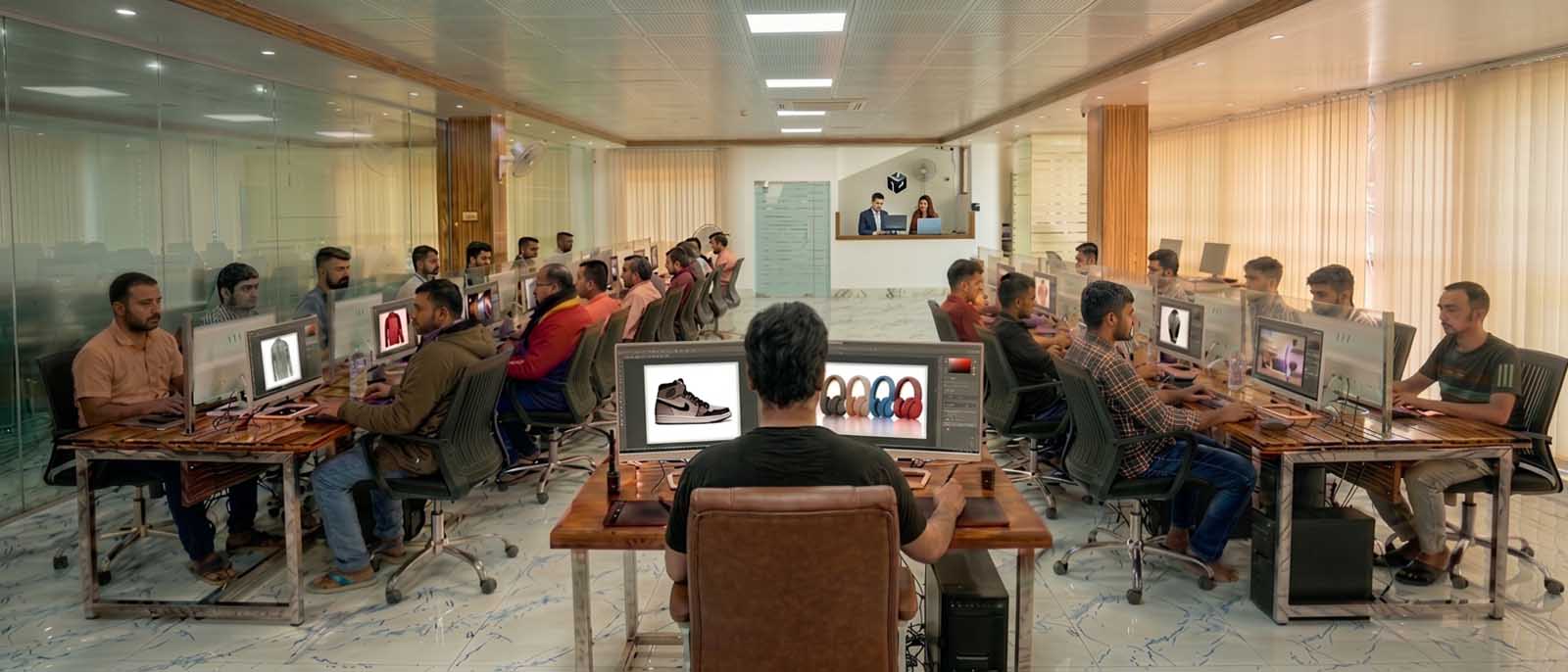
Client-facing offices and support run from the United States, the United Kingdom and Australia. All editing is produced in the Dhaka facility.
A legacy mark modernised without losing recognition
Harrow & Sons, a family-run bakery founded in 1962, carried a mark that had been redrawn repeatedly and no longer held a usable master file. Clipping Path Center rebuilt it as vector, simplified the detail that was disappearing at small sizes and in embroidery, kept the elements customers actually recognised, and delivered the full family with copyright transferred. One file set replaced 6 inconsistent versions in circulation.
“We’d lost track of which version of our own logo was correct. Now every application, from the shopfront to the uniforms, uses the exact same file.”
— Tom Harrow, Owner · February 2026

Logo design pricing
Logo work is priced per project rather than per hour, agreed at brief stage against the scope you actually need.
| Scope | What is included | Price |
|---|---|---|
| Essential | Concepts, refinement, primary lockup and core file set | From $29 |
| Full identity | All layouts and colour versions, plus the usage sheet | Quoted per project |
| Brand system | Logo family plus colour, typography and application guidance | Quoted per project |
| Redraw and modernise | An existing mark rebuilt as vector and brought up to date | Quoted per project |
Prices are quoted in US dollars per image and are current as of 10 August 2026. Volume above [minimum monthly volume] images per month moves into a discounted tier.
Who checked this page

Salim Ahmed
Salim Ahmed runs the production floor and everything at Clipping Path Center in Dhaka, where he has worked in image post-production since 2008. He sets the quality-control standard every delivered file is measured against and personally reviews escalated brand mark design and vector identity systems work.
Logo design: questions businesses ask before commissioning
What is a custom logo design service?
A custom logo design service produces an original brand mark drawn for one business, along with the full family of files needed to use it: several layouts, several colour versions, vector and raster formats, and written guidance on application.
Do I own the logo?
Yes. Full copyright in the final chosen mark transfers to you in writing on final payment, together with the source files. Unselected concepts stay with us unless you buy them separately, and that is stated at brief stage rather than at handover.
How many concepts do I get?
Several genuinely different directions, each a distinct idea rather than a recolouring of one. Concepts are presented in black on white first, because colour hides a weak mark.
How many revisions are included?
Unlimited within the direction you choose. The limit is on switching direction repeatedly, not on refining the one you picked.
What files do I receive?
AI, EPS, SVG and PDF as vector, plus PNG and JPEG at the sizes you need. Primary lockup, horizontal, stacked and icon-only layouts, in full colour, one colour, black, white and reversed, with Pantone, CMYK, RGB and hex values stated.
Will the logo work at small sizes and in one colour?
It is designed and tested for it. Every mark is checked at favicon size, in a single colour, reversed out of a dark background and simplified for embroidery, because those are the four conditions where logos actually fail. Detail that disappears at sixteen pixels is removed rather than defended.
Can you redraw or modernise our existing logo?
Yes. An existing mark can be rebuilt as vector and updated while keeping the elements customers recognise. If it only needs converting rather than changing, raster to vector conversion is the cheaper service.
Can I trademark the logo?
The written copyright transfer is what makes registration possible, and it is standard here. Whether a specific mark can be registered in your jurisdiction and class is a legal question for a trademark attorney, not a design question, and we will not tell you otherwise.
What typeface will you use?
The typeface is named on delivery with its licence terms stated, and type in the logo files is outlined so nothing is missing downstream. You need to know the licence because it governs whether you can use that face elsewhere in your material.
How much does a logo cost?
From $29 for the essential scope. Full identity, brand system and redraw work is quoted per project at brief stage, because the price follows what you actually need rather than a fixed package.
More answers on the Clipping Path Center FAQ page.
Send two images. See the work first.
Tell us the business, the audience and where the mark has to work. You will get original directions before committing to the project.
Two free sample images · No card required · No minimum order