
Clothes Photo Editing Service
Apparel is judged on two things a photograph struggles with: how the garment hangs, and what color it really is. Clipping Path Center builds ghost mannequin shots by hand, matches fabric color to your physical reference, and holds one editorial look across a full season drop.
- Founded 2008 · 15+ years
- 150+ in-house editors
- Hand-edited, human QA
- NDA on every file
- No minimum order
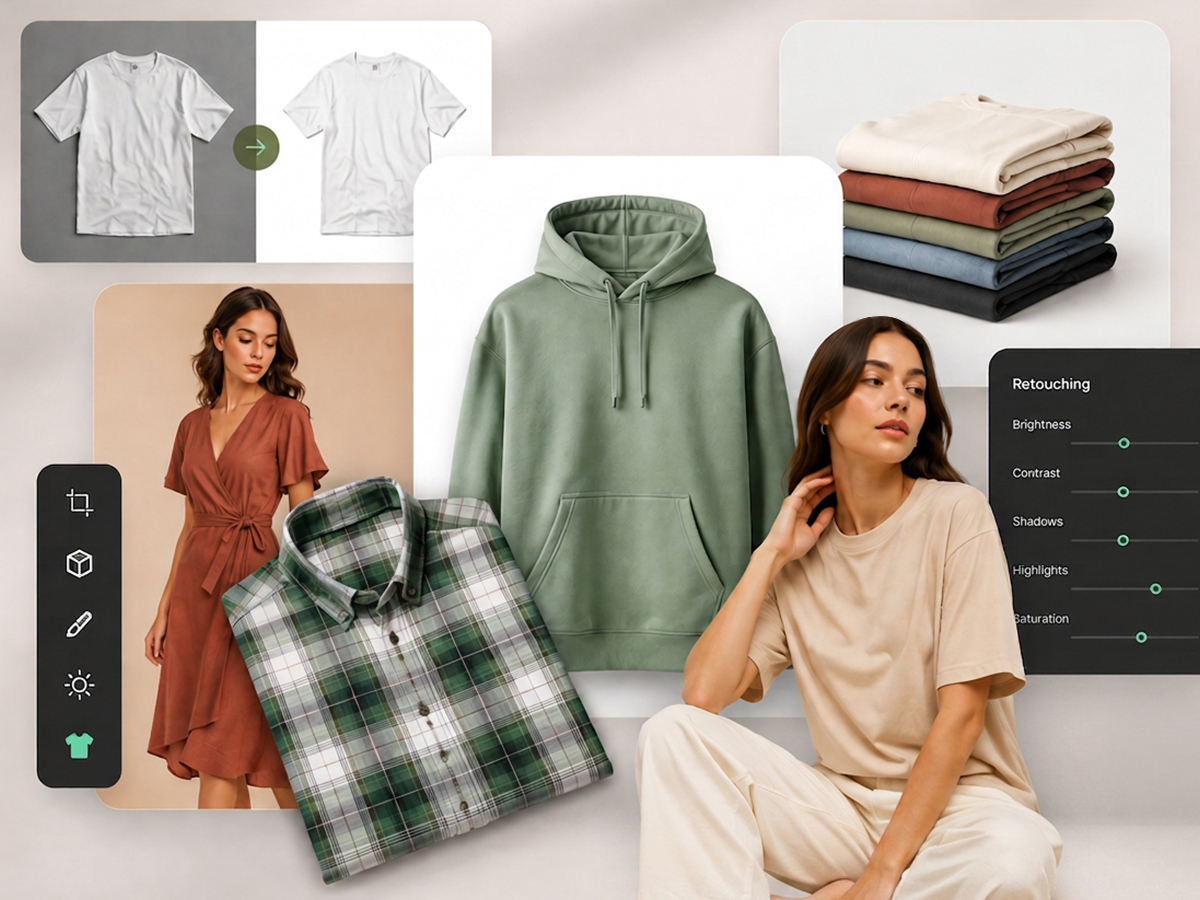
Clothes photo editing at Clipping Path Center: the specification
| Service | Clothes photo editing — ghost mannequin, fabric color, wrinkle and thread cleanup, background |
|---|---|
| Method | Hand-edited in Adobe Photoshop on masked layers; no batch presets across a collection |
| Standard turnaround | 24 hours; 48 hours for ghost mannequin and multi-layer work |
| Price | From $0.39 per image; ghost mannequin quoted per garment |
| Minimum order | None. A single sample or a full season drop. |
| Ghost mannequin inputs | Two shots of the same garment: exterior on mannequin, plus an interior collar shot |
| Color reference | A physical swatch, a Pantone value, or an approved master image |
| Files accepted | JPEG, PNG, TIFF, PSD, RAW |
| Files delivered | JPEG or transparent PNG at your platform dimensions, plus layered PSD on request |
| Revisions | Free until the file matches your written specification |
| Confidentiality | NDA on every file; encrypted FTP and SFTP transfer |
| Free trial | Two garments, edited and returned before you commit |
Specifications current as of 10 August 2026.
Color matched to the real garment
Fabric shade is corrected against your physical reference, not adjusted by eye. Color mismatch is one of the most common reasons apparel comes back.
Fabric still reads as fabric
Wrinkles, lint and stray threads go. Weave, drape and pile stay. Over-smoothed apparel photographs as plastic and undersells the material.
One look across the drop
A collection shot across several days is brought to a single editorial standard, so the range reads as one brand rather than as unrelated product shots.
What is clothes photo editing?
Clothes photo editing is the post-production of apparel photography for e-commerce, lookbooks and wholesale catalogues. It covers ghost mannequin construction, fabric color matching, wrinkle and thread cleanup, background replacement, and a consistency pass across a collection.
Apparel carries a commercial problem no other product category has to the same degree: the buyer cannot touch it, so the photograph has to carry both the shape and the color accurately. A garment that photographs half a shade off, or that hangs flat because it was shot on a hanger, produces a sale and then a return.
The editing choices follow from that. Color is matched to a physical reference rather than made attractive. Fabric texture is preserved rather than smoothed, because the weave is how a buyer judges quality on screen. And the garment is given three-dimensional shape, either through a ghost mannequin build or through careful retouching of the drape.
On-model, ghost mannequin, flat-lay, hanger: what each format costs you
The shooting format decides most of the editing cost and most of the conversion, and the two do not move together. This is the trade-off.
| Format | Shows fit and drape | Shooting cost | Editing needed | Best for |
|---|---|---|---|---|
| On-model | Best | Highest — model, studio, styling | Retouching, color, background | Hero shots and lookbooks |
| Ghost mannequin | Strong | Moderate — two shots per garment | Neck-joint build, color | Listing images at catalogue scale |
| Flat-lay | Limited | Low | Wrinkle cleanup, color, background | Accessories, knitwear, basics |
| On hanger | Poor — garment collapses | Lowest | Heavy retouching to rebuild shape | Internal reference only |
Most brands land on a mix: on-model for the hero image, ghost mannequin for the listing set, flat-lay for detail shots. The one to avoid at listing scale is on-hanger, because the garment collapses at the shoulder and the editing needed to rebuild that shape costs more than shooting it on a mannequin in the first place. See how the ghost mannequin build works.
How Clipping Path Center edits apparel
Four operations account for almost all apparel work, and they run in this order because color decisions made before the shape is resolved get made twice.

Ghost mannequin and neck joint
The exterior shot and an interior collar shot are merged so the garment reads as filled and worn with nobody inside it. The neck joint decides whether this works: a collar that does not follow the shoulder line is visible at listing thumbnail size, before a buyer has clicked anything. Cuffs and hems are joined the same way where the garment needs it.

Fabric color matched to reference
Color is corrected against a physical swatch, a Pantone value or an approved master image rather than adjusted by eye. Deep blacks, navies and unbleached whites are the ones that go wrong most often, because studio lighting pushes all three. Where a fabric genuinely photographs differently under different light, that is flagged rather than split the difference.

Wrinkles and threads, not texture
Packing creases, stray threads, lint and styling pins are removed. The natural fall of the fabric and the shadows that describe the drape are kept, along with the weave. Apparel smoothed past that point photographs as plastic, which reads as cheap on exactly the products where material quality is the selling point.

Collection consistency pass
A final review puts the whole drop side by side rather than judging files one at a time. Exposure, background value, garment scale within the frame and crop margin are brought to one standard. This is the pass that makes a collection page look like a brand instead of a folder.
What an apparel listing image has to satisfy
Apparel carries the highest return rate in e-commerce, and most of the causes are visible in the photograph.
| Requirement | What it means in practice | What it prevents |
|---|---|---|
| Main-image background | Pure white, RGB 255,255,255 | Marketplace rejection of the listing |
| Accurate fabric color | Matched to a physical swatch or Pantone value | Returns where the garment arrives the wrong shade |
| Visible shape | Ghost mannequin or on-model, not on-hanger | Returns where the fit was not readable |
| Preserved texture | Weave, pile and drape intact after retouching | Material reading as cheaper than it is |
| Consistent scale | Every garment filling the frame to the same proportion | A collection page that looks assembled from several sellers |
| Detail coverage | Fabric close-up, fastenings, label and lining shots | Questions that would otherwise become a return |
| No altered fit | Shape not narrowed, lengthened or slimmed | Misrepresentation of the product |
Marketplace background values follow Amazon’s published product image requirements in Seller Central, checked 10 August 2026. Clipping Path Center does not alter the cut or fit of a garment: shape is rebuilt where the mannequin distorted it, never changed from what the garment actually is.

Who orders clothes photo editing
Fashion brands
One editorial look held across a full season drop, from hero image to listing set.
Apparel retailers
High-volume ghost mannequin and color work across a mixed-supplier range.
Marketplace sellers
White-background listing images that clear review on the first submission.
Boutiques and independents
On-model and flat-lay retouching at a standard that competes with larger catalogues.
How an apparel editing job runs
Apparel work is seasonal and repeats, so the first few garments set the look the whole drop is measured against.
Send two garments
Upload a representative pair, ideally the ones you expect to be difficult. They are edited free, under NDA, before any commitment.
Agree the look
We confirm format per product type, background, color reference method, crop and scale, output dimensions and file naming, then quote against that written specification.
Edit and check
Editors build and retouch each garment by hand. Quality control reviews the drop side by side, which is the only way a color or scale drift across a collection becomes visible.
Deliver on a drop schedule
Files return within 24 hours for standard work, or to an agreed daily volume across a season, so launch dates hold.
Who edits your images, and where
Apparel color and neck-joint work are the two places where a batch process is obvious in the result, so the relevant fact is that a person handles each garment. These are the figures behind the team.
Year Clipping Path Center was founded. Fifteen-plus years of continuous production work sit behind the current process.
In-house editors on the production floor in Dhaka, Bangladesh. No freelancer marketplace and no rotating contractors.
Quality-control passes before delivery: editor self-check, dedicated QA against your written specification, and a final pre-delivery review.
Zoom level editors work at when tracing edges with the Photoshop pen tool. Path accuracy is judged at that magnification, not at fit-to-screen.
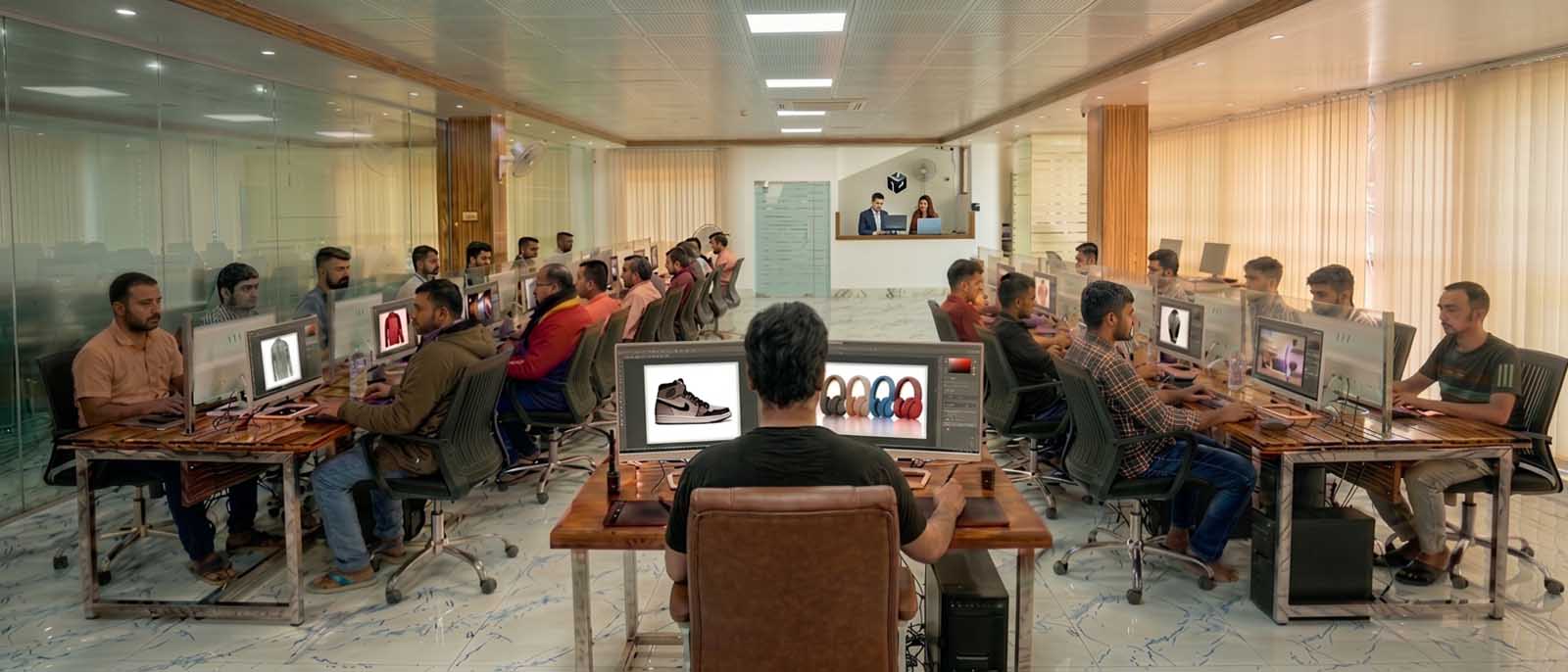
Client-facing offices and support run from the United States, the United Kingdom and Australia. All editing is produced in the Dhaka facility.
One editorial look across a season drop
Marlow & Finch, a womenswear brand, needed 180 garments photographed across 04 shoot days to share one look for a season launch. Clipping Path Center built the ghost mannequin set, matched every fabric color against supplied swatches, and ran a consistency pass over the whole drop before delivery. Color-related returns fell from 7 per cent to 2 per cent across the season.]
“The color matching alone saved us weeks of back-and-forth. Every image landed exactly the way our swatches looked in person.”
— Ana Reyes, E-commerce Manager · March 2026

Clothes photo editing prices, per image
Apparel is priced by the operation. Ghost mannequin is quoted per garment because the effort follows the construction, not the file.
| Type of work | What falls into it | Price per image |
|---|---|---|
| Basic apparel edit | Cut-out, white background, crop and straightforward color correction | From $0.39 |
| Retouching | Wrinkle, thread, lint and pin cleanup with texture preserved | From $0.49 |
| Ghost mannequin | Exterior and interior shots merged, neck joint, cuffs and hems | Quoted per garment |
| Season drop | Full collection to one specification with a consistency pass | Quoted per drop |
Prices are quoted in US dollars per image and are current as of 10 August 2026. Volume above [minimum monthly volume] images per month moves into a discounted tier.
Who checked this page

Salim Ahmed
Salim Ahmed runs the production floor and everything at Clipping Path Center in Dhaka, where he has worked in image post-production since 2008. He sets the quality-control standard every delivered file is measured against and personally reviews escalated apparel post-production, ghost mannequin construction and fabric color work.]
Clothes photo editing: questions apparel brands ask
What is clothes photo editing?
Clothes photo editing is the post-production of apparel photography for e-commerce, lookbooks and wholesale catalogues. It covers ghost mannequin construction, fabric color matching against a reference, wrinkle and thread cleanup, background replacement and a consistency pass across a collection.
What do you need to build a ghost mannequin?
Two photographs of the same garment: the exterior on a mannequin, and an interior shot showing the collar, plus cuffs and hem where the garment needs them. Without the interior shot the neck opening has to be invented, and that is visible at listing thumbnail size.
How do you get the fabric color right?
Color is corrected against a physical swatch, a Pantone value or an approved master image rather than adjusted by eye. Send the reference with the shoot. Blacks, navies and unbleached whites are the shades studio lighting pushes hardest, and they are the ones worth referencing.
Will retouching make the fabric look fake?
Not if it is done properly. Packing creases, stray threads, lint and pins are removed while the weave, the pile and the shadows that describe the drape are kept. Apparel smoothed past that point photographs as plastic, which undersells exactly the products where material quality matters.
Can you edit on-model shots as well as mannequin shots?
Yes. On-model work covers skin and hair retouching, garment cleanup, background and color. The garment is treated the same way in both cases: shape and color accurate, texture intact.
Can you shoot from hanger photos?
It is possible but it is the most expensive route. A garment on a hanger collapses at the shoulder, so the shape has to be rebuilt by hand, which usually costs more than reshooting it on a mannequin would have.
Will you change the fit of a garment?
No. Shape distorted by the mannequin or by a pin is corrected back to how the garment actually hangs. Narrowing, lengthening or slimming a garment misrepresents the product and produces returns.
How do you keep a whole collection consistent?
By reviewing the drop side by side rather than judging images one at a time. Exposure, background value, garment scale in the frame and crop margin are brought to one standard in a final pass, which is where color and scale drift across a collection becomes visible.
How fast is delivery?
Standard turnaround is 24 hours. Ghost mannequin and multi-layer work runs to 48 hours. Season drops run to an agreed daily volume so a launch date can be planned against the schedule.
How much does clothes photo editing cost?
From $0.39 per image for cut-out, background and straightforward color correction, and from $0.49 for retouching. Ghost mannequin is quoted per garment because the effort follows the construction rather than the file.
More answers on the Clipping Path Center FAQ page.
Send two images. See the work first.
Send two garments, ideally the difficult ones. They come back built, color-matched and free.
Two free sample images · No card required · No minimum order