
Image Editing Services
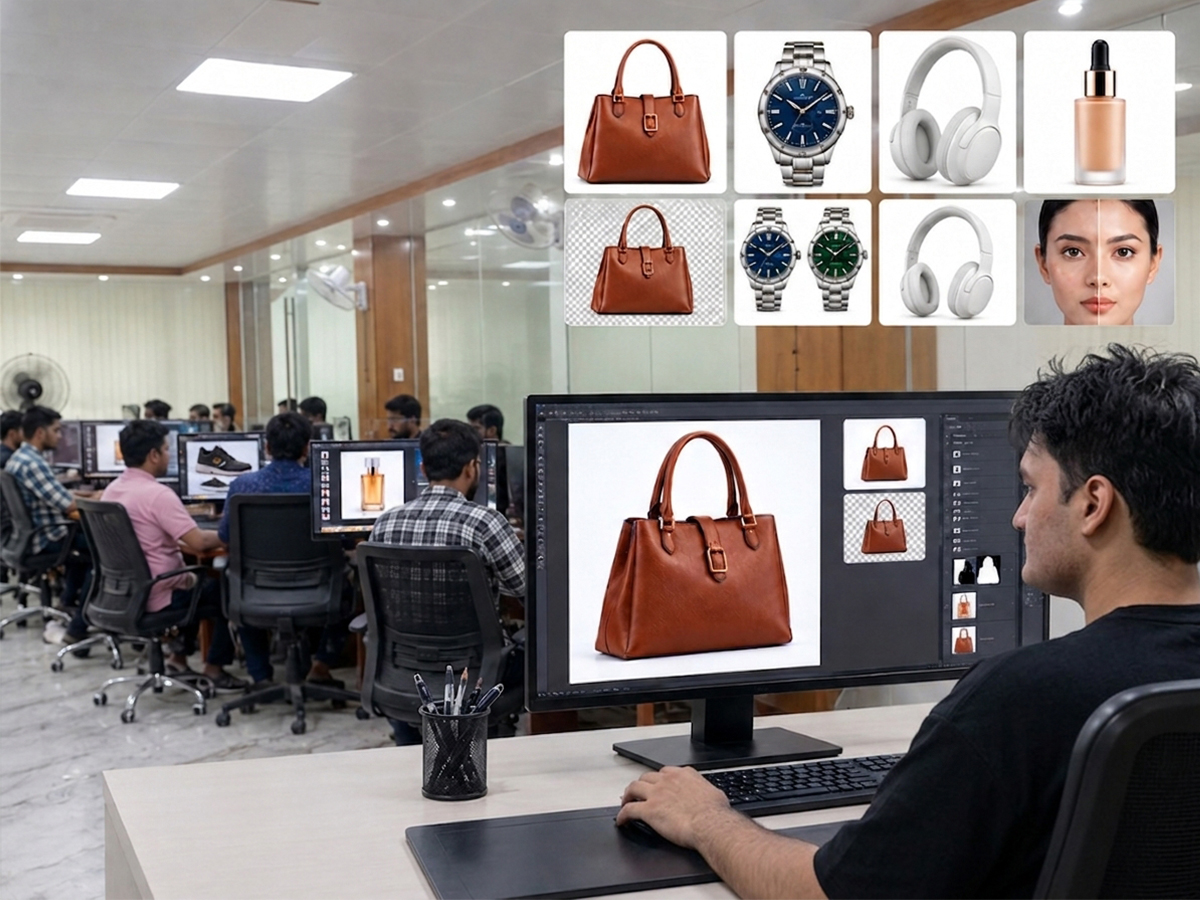
Clipping Path Center is an outsourced image editing company. One hundred and fifty in-house editors in Dhaka produce clipping paths, background removal, retouching, colour correction and composite work by hand, check every file against your written specification, and return standard jobs in 24 hours.
- Founded 2008 · 15+ years
- 150+ in-house editors
- Hand-edited, human QA
- NDA on every file
- No minimum order
Working with Clipping Path Center: the specification
| Company | Clipping Path Center, founded 2008. Fifteen-plus years in image post-production. |
|---|---|
| Production | 150+ in-house editors on one production floor in Dhaka, Bangladesh |
| Client-facing offices | United States, United Kingdom, Australia |
| Method | Hand-edited by trained human editors; every file passes human QA |
| Standard turnaround | 24 hours; 48 hours for complex work. Express available on request. |
| Price | From $0.39 per image. Volume moves into discounted tiers. |
| Minimum order | None |
| Files accepted | JPEG, PNG, TIFF, PSD, RAW |
| Delivery | Your choice of format and layer structure, over the site, FTP or SFTP |
| Revisions | Free until the file matches your written specification |
| Confidentiality | NDA on every file; encrypted transfer; files used only for your order |
| Free trial | Two images, edited and returned before you commit |
Specifications current as of 10 August 2026.
One specification, held across the batch
Framing, background value, colour reference, output formats and file naming are fixed in writing before the first image and applied to every file after it.
24-hour standard turnaround
Standard jobs return within 24 hours. Ongoing catalogues run to an agreed daily volume, so a launch date can be planned against the schedule.
NDA on every file
Unreleased product photography is covered from the moment it arrives, transferred over encrypted FTP or SFTP, and used only to complete your order.
What are outsourced image editing services?
Outsourced image editing is the practice of contracting photographic post-production to a dedicated production company rather than employing editors directly. The work covers cut-outs, background replacement, colour correction, retouching, shadow creation and composite construction.
The decision is usually about variance rather than about cost. An in-house team of two produces a consistent standard until one of them takes leave. A freelancer marketplace produces a different standard for every brief. A production company holds a written specification across a whole catalogue, which is the thing a listing page, a printed catalogue and a paid campaign all depend on.
Clipping Path Center produces this work with 150 in-house editors on a single production floor. Every file is edited by a person and reviewed by a separate quality-control reviewer against your written specification before it is delivered.
Outsourced production compared with the alternatives
There are four realistic ways to get product photography edited. They differ less on price than on whether the thousandth image matches the first.
| Option | Consistency across a batch | Handles complex edges | Scales overnight | Confidentiality |
|---|---|---|---|---|
| In-house editors | High while staffed | Yes | No, capped by headcount | Full control |
| Freelancer marketplace | Varies by freelancer | Varies | Requires re-briefing each time | Case by case |
| Automated or AI tools | Consistent | Fails on hair, mesh, glass | Yes | Check the tool’s data terms |
| Outsourced production company | Held to a written specification | Yes | Yes, to an agreed daily volume | NDA on every file |
The honest reading of that table is that automated tools are the right answer for internal previews and draft layouts, where speed matters and an imperfect edge costs nothing. They are the wrong answer for a main listing image, a printed page or a campaign asset, because the failure modes — softened edges, haloing, lost fine detail — appear precisely on the images a customer looks at longest.
What Clipping Path Center produces
Four production areas cover the work. Each links to the service page that holds its own specification, pricing and turnaround.

Cut-outs and backgrounds
Hand-drawn clipping paths and deep etching for hard-edged products, image masking for hair, fur and translucent edges, and background removal to white, transparency or a stated colour value. This is the largest single category of work on the floor.

Colour, tone and enhancement
Colour correction against a physical reference so the delivered image matches the product a customer receives, and image enhancement to recover exposure, neutralise colour casts and reduce noise on photography shot in imperfect conditions.

Retouching and repair
Photo retouching for dust, scuffs, creases and stray reflections, and photo restoration for damaged or aged originals. The standard is that the material still reads as the material after the edit.

Composites and construction
Image manipulation for ghost mannequin construction, object removal and multi-image composites, plus shadow and reflection work so an isolated product sits on its background rather than floating above it.
What is agreed before production starts
Consistency is not a quality of the editing. It is a property of the specification the editing is measured against, so the specification is fixed in writing first.
| Specification item | What gets agreed | Why it matters |
|---|---|---|
| Background | Exact value: pure white RGB 255,255,255, transparent, or a stated hex or colour value | Marketplace review rejects an off-white main image |
| Framing and margin | The proportion of the frame the product fills, and the margin around it | Products at different scales look wrong side by side on a listing grid |
| Colour reference | A physical sample, a Pantone value, or an approved master image | Returns caused by colour mismatch are the expensive failure mode |
| Output formats | Which formats, at which pixel dimensions, in which colour space | Transparency needs PNG or TIFF; JPEG cannot carry it |
| Layer structure | Flattened, or layered PSD with a stated naming and grouping convention | A layered file your team cannot navigate is a flat file with extra steps |
| File naming | The naming pattern, matched to your SKU or catalogue system | Bulk ingestion fails on inconsistent names, not on image quality |
| Volume and schedule | Daily throughput and the delivery window | A launch date is planned against throughput, not against a turnaround promise |
The specification is recorded at quote stage, issued to you in writing, and is the document quality control measures every delivered file against. Revisions are free where a file does not match it.

Who outsources image editing, and why
E-commerce brands
Catalogue-wide consistency across SKUs photographed on different days by different people.
Photography studios
Post-production capacity that absorbs a shoot backlog without adding permanent headcount.
Agencies
White-label production for client campaigns, delivered under the agency’s own name and NDA.
Retailers and manufacturers
Bulk cut-outs and colour matching across large, frequently refreshed product ranges.
How an image editing engagement runs
The same four steps govern a two-image test and an ongoing catalogue. Only the schedule changes.
Send a sample
Upload two representative images through the site. They are edited and returned free, under NDA, before any commitment. Representative means difficult, not easy.
Fix the specification
We agree background, framing, colour reference, formats, layer structure, file naming and daily volume in writing, and quote against that document.
Produce and check
Editors work the batch by hand. Each file passes an editor self-check, a dedicated QA review against the written specification, and a final pre-delivery pass.
Deliver and iterate
Files return over the site, FTP or SFTP in the agreed formats. Anything off-specification is corrected free of charge, and the specification is updated if your requirements change.
Who edits your images, and where
For an outsourced engagement the relevant question is not what the service is called but who performs it and how often it is checked. Those facts are stated here rather than implied.
Year Clipping Path Center was founded. Fifteen-plus years of continuous production work sit behind the current process.
In-house editors on the production floor in Dhaka, Bangladesh. No freelancer marketplace and no rotating contractors.
Quality-control passes before delivery: editor self-check, dedicated QA against your written specification, and a final pre-delivery review.
Zoom level editors work at when tracing edges with the Photoshop pen tool. Path accuracy is judged at that magnification, not at fit-to-screen.
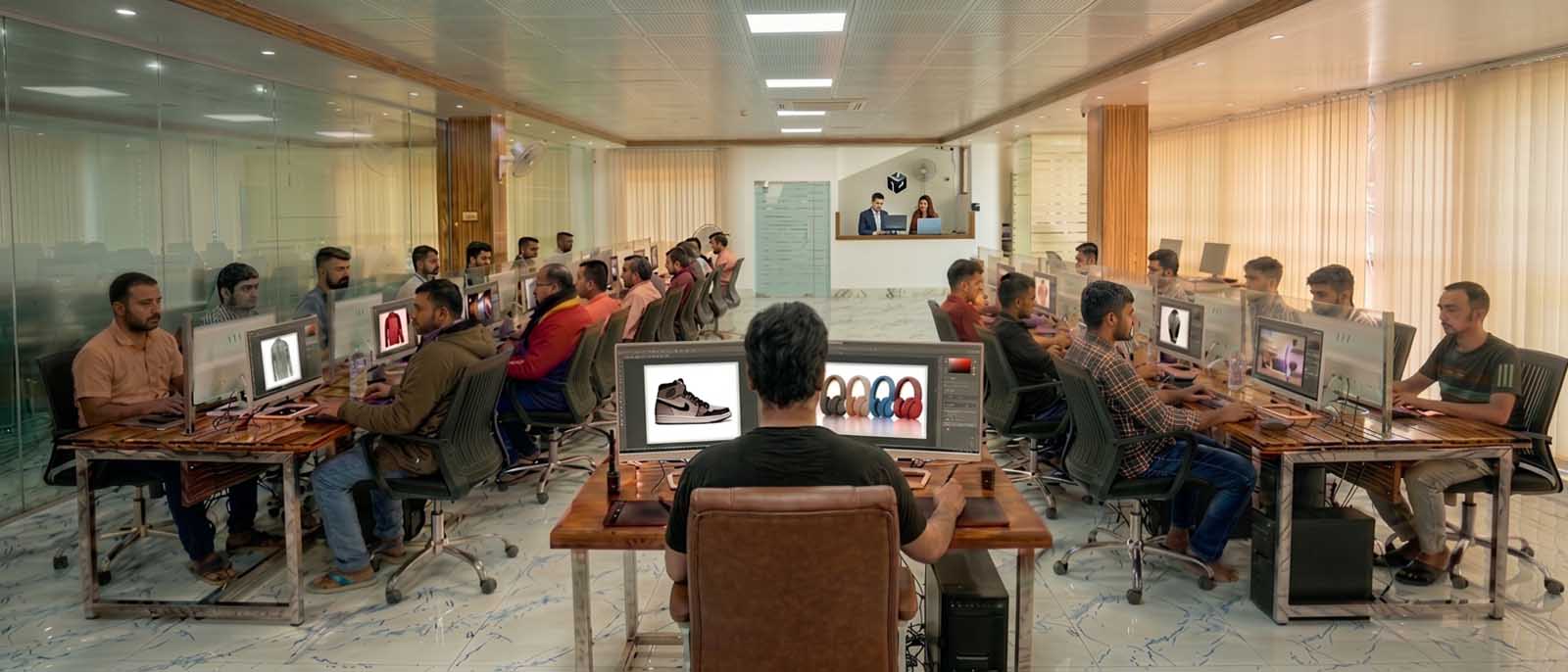
Client-facing offices and support run from the United States, the United Kingdom and Australia. All editing is produced in the Dhaka facility.
Absorbing catalogue volume without in-house hiring
Cedarline Outdoor Goods, a homeware and outdoor gear retailer, needed 800 new SKUs processed to a single standard each month and had no in-house post-production capacity. Clipping Path Center fixed a written specification covering cut-out, background, colour reference and file naming, then ran the catalogue against it at 150 images per day so the retailer could plan launch dates against the schedule rather than against a turnaround promise. 9 launches shipped on schedule over 6 months with no in-house editing hire.
“We were about to hire a full-time editor just to keep up with volume. Instead we got a predictable daily throughput that let us plan launches around a schedule we could actually count on.”
— James Cedarline, Operations Manager · March 2026

Image editing prices, per image
Pricing is per image and set by the operation, not by the industry. Monthly volume moves the whole account into a discounted tier.
| Category | Typical work | Price per image |
|---|---|---|
| Basic | Clipping path, background removal, straightforward colour correction | From $0.39 |
| Intermediate | Shadow creation, basic retouching, neck-joint work on flat apparel | From $0.49 |
| Advanced | Complex masking, high-end retouching, image manipulation and composites | From $1.19 |
| Managed account | Dedicated team, FTP or API integration, agreed daily throughput | Quoted per account |
Prices are quoted in US dollars per image and are current as of 10 August 2026. Volume above [minimum monthly volume] images per month moves into a discounted tier.
Who checked this page
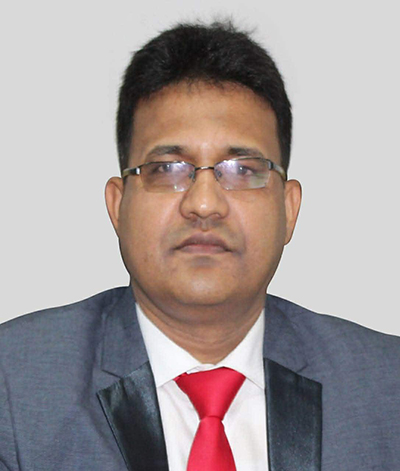
Salim Ahmed
Salim Ahmed runs the production floor and everything at Clipping Path Center in Dhaka, where he has worked in image post-production since 2008. He sets the quality-control standard every delivered file is measured against and personally reviews escalated outsourced image post-production and production specification work.
Outsourced image editing: questions buyers ask before ordering
What are outsourced image editing services?
Outsourced image editing is contracting photographic post-production to a dedicated production company instead of employing editors directly. It covers cut-outs, background replacement, colour correction, retouching, shadow creation and composite construction, produced to a written specification across a whole batch.
How much does outsourced image editing cost?
Pricing at Clipping Path Center starts at $0.39 per image for clipping paths, background removal and straightforward colour correction. Intermediate work such as shadow creation starts at $0.49 and advanced retouching and manipulation from $1.19. Monthly volume moves the account into a discounted tier.
Do you use AI or human editors?
Every image is edited by a trained human editor and checked by a human quality-control reviewer. This is the reason complex edges, fine detail and colour accuracy hold up on files where automated tools soften the edge or leave a halo.
Is there a minimum order?
No. A single image and an ongoing catalogue are both accepted. Pricing scales with volume rather than gating access to the service.
How fast is delivery?
Standard turnaround is 24 hours and complex work runs to 48 hours. Express delivery is available on request. Ongoing catalogues run to an agreed daily throughput, which is the figure to plan a launch date against.
How do you keep quality consistent across thousands of images?
By fixing the specification before production rather than judging files afterwards. Background value, framing margin, colour reference, output formats, layer structure and file naming are agreed in writing, and quality control measures every delivered file against that document.
What file formats do you accept and deliver?
JPEG, PNG, TIFF, PSD and RAW are accepted, and delivery is in whichever of those you need. Transparency requires PNG or TIFF because JPEG cannot store an alpha channel. Layered PSD delivery is available with a stated naming convention.
Can you integrate with our systems?
Yes. Files can move over the website, a dedicated FTP folder or SFTP, and delivery folders can be structured to match your ingestion process.
Is our product photography kept confidential?
Yes. Every file is covered by an NDA from arrival, transferred over encrypted FTP or SFTP, and used only to complete your order. Unreleased product photography is a routine part of the work.
What happens if we are not happy with a file?
It is corrected free of charge. Revisions are free until the file matches the written specification agreed at quote stage.
More answers on the Clipping Path Center FAQ page.
Send two images. See the work first.
Send two of your most difficult images. They come back edited, free, under NDA, before you commit to anything.
Two free sample images · No card required · No minimum order
Comments are closed.