
Photo Restoration Service
A damaged photograph is usually the only copy. Clipping Path Center restores tears, scratches, water damage, mould and fading by hand, works only from your scan so the original is never touched, and returns the repaired file alongside an untouched copy of what you sent.
- Founded 2008 · 15+ years
- 150+ in-house editors
- Hand-edited, human QA
- NDA on every file
- No minimum order
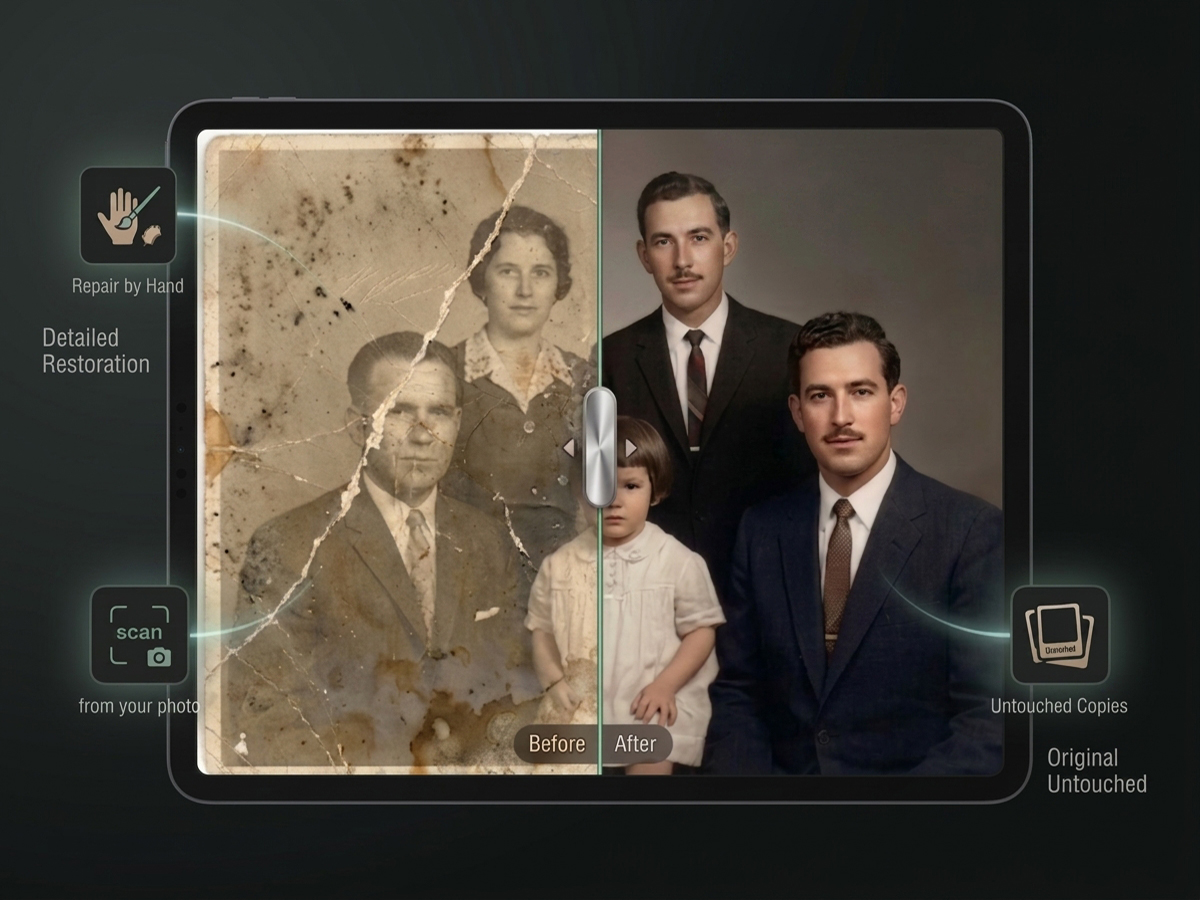
Photo restoration at Clipping Path Center: the specification
| Service | Photo restoration — tear, scratch, stain, mould and fading repair, plus colourisation |
|---|---|
| Method | Rebuilt by hand from your scan. The physical original is never handled or altered. |
| Standard turnaround | 48 to 72 hours, depending on the extent of the damage |
| Price | From $1.19 per photograph; heavy reconstruction and colourisation quoted individually |
| Minimum order | None. A single photograph is a normal order here. |
| What you send | A flatbed scan at 600 dpi or higher, saved as TIFF or maximum-quality JPEG |
| Files delivered | Restored TIFF or JPEG at full resolution, plus your original scan returned untouched |
| Colourisation | Available on black-and-white and sepia originals, researched rather than guessed |
| Missing areas | Reconstructed only where the surrounding image supports it, and disclosed when done |
| Revisions | Free until the result matches what you asked for |
| Confidentiality | NDA on every file; family photographs are never used as samples without written permission |
Specifications current as of 10 August 2026.
The original is never touched
All work happens on your scan. Nothing is cleaned, flattened, trimmed or chemically treated, and no physical photograph is posted anywhere.
Faces are rebuilt with care
Damage across a face is the hardest and most sensitive part of the work. It is rebuilt from the surrounding image and from other photographs of the same person where you can supply them.
Reconstruction is disclosed
Where an area is missing entirely, what was rebuilt and on what basis is stated on delivery. A restored photograph should not quietly become a different photograph.
What is photo restoration?
Photo restoration is the digital repair of a damaged photographic print, negative or slide. It covers tears, creases, scratches, surface abrasion, water stains, mould and foxing, chemical fading, colour shift in ageing prints, and the reconstruction of areas that have been lost entirely.
The work happens on a scan. The physical photograph stays with you, and nothing about it changes. What is delivered is a repaired digital file that can be printed, shared and archived, alongside the untouched scan you supplied.
Two categories of work sit inside restoration and it is worth separating them. Repair puts back what the damage removed, using evidence still present in the image. Reconstruction fills areas where no evidence survives, and that is interpretation rather than recovery. Both are legitimate; only one should happen silently, and it is not the second.
What can be recovered, and what is being invented
Restoration promises are usually made without this distinction. It matters most on photographs of people, which is most of them.
| Damage | Recoverable? | How | Disclosed? |
|---|---|---|---|
| Scratches and surface abrasion | Yes | Cloned from adjacent undamaged image | Not needed |
| Tears and creases | Yes | Rebuilt from both sides of the tear | Not needed |
| Fading and colour shift | Yes | Tonal and colour response corrected | Not needed |
| Water stains and mould | Usually | Removed where image detail survives beneath | Where detail was lost |
| A missing corner of background | Yes | Extended from surrounding background | Noted on delivery |
| Half a face missing | Not recoverable | Reconstructed from other photographs of the same person, or left | Always stated |
| Original colour of a black-and-white photo | Not recorded | Researched from period materials, or from your knowledge | Always stated |
The last two rows are the reason we ask questions before starting. If half a face is gone, another photograph of the same person turns reconstruction into evidence-based repair. If you know the dress was green, colourisation stops being an assumption. Send whatever you have; it changes what the finished photograph is worth. See what tonal recovery alone can do.
How Clipping Path Center restores a photograph
Four operations, run in this order, because repairing detail before the tone is corrected means repairing it against the wrong reference.

Structural damage repair
Tears, creases, scratches and punch holes are rebuilt by cloning and reconstructing from the undamaged image on either side of the damage. The paper grain and the photographic texture are carried across the repair, so the join does not read as a smooth patch against a textured print.

Fading, stains and mould
Chemical fading is corrected by rebuilding the tonal response rather than by raising contrast, which would crush what little detail survives. Water stains, foxing and mould are removed where image detail survives underneath them; where it does not, the area is treated as reconstruction and flagged.

Faces and figures
Damage across a face is rebuilt from the undamaged half, from the person’s features elsewhere in the frame, and from any other photograph of the same person you can supply. Without a reference, extensive facial reconstruction becomes invention, and we will say so and offer to leave the area rather than guess at a likeness.

Colourisation
Black-and-white film recorded no colour, so colourisation is always interpretation. It is based on period-accurate materials, dyes and uniforms where the subject can be dated, and on whatever you can tell us about the people and the clothing. Anything you remember about the actual colours is more valuable than any research we can do.
How to send a photograph so it can be restored properly
The scan sets the ceiling on the result. A restoration cannot recover detail the scan did not capture.
| Item | What to do | Why |
|---|---|---|
| Scanner | Flatbed scanner rather than a phone camera | A phone photograph adds its own distortion and glare |
| Resolution | 600 dpi minimum; 1200 dpi for a small or very damaged print | Repair happens at pixel level; more pixels means finer repair |
| File format | TIFF, or JPEG at maximum quality | JPEG compression discards exactly the fine detail being rebuilt |
| Colour mode | Scan in colour even for a black-and-white print | Colour scans retain tonal information greyscale discards |
| Cleaning | Do not clean, flatten or tape the original first | Home cleaning removes emulsion; tape damage is permanent |
| Curled or torn prints | Scan as they are, in pieces if necessary | Pieces are rejoined digitally with no risk to the original |
| Reference material | Send other photographs of the same people if you have them | Turns facial reconstruction into evidence-based repair |
| What you know | Tell us names, dates, places and remembered colours | Your knowledge outranks any research we can do |
Clipping Path Center works only from digital scans. No physical photograph is posted, handled or altered, which removes the single largest risk in restoration — losing an irreplaceable original in transit.

Who orders photo restoration
Families
A single irreplaceable photograph repaired for a memorial, an anniversary or a reprint.
Genealogists
Faces and inscriptions made legible across a collection of ageing prints.
Archives and museums
Batch restoration of a photographic collection to one documented standard.
Photographers and studios
Client restoration work absorbed without taking a retoucher off current shoots.
How a restoration job runs
Restoration is the one service here where a conversation before the work usually changes the result.
Send the scan
Upload a flatbed scan at 600 dpi or higher, in colour, along with anything you know about the photograph. Nothing physical is posted.
Agree the scope
We describe what can be repaired from surviving evidence and what would be reconstruction, and quote against that. You decide what is rebuilt and what is left.
Restore by hand
An editor rebuilds the photograph section by section. Quality control checks the repair against the original scan at full resolution.
Delivery
The restored file returns at full resolution alongside your untouched original scan, with a short note on anything that was reconstructed.
Who edits your images, and where
Restoration is slow, manual work that cannot be batched, and the outcome depends almost entirely on the patience of the person doing it. These are the facts about the floor.
Year Clipping Path Center was founded. Fifteen-plus years of continuous production work sit behind the current process.
In-house editors on the production floor in Dhaka, Bangladesh. No freelancer marketplace and no rotating contractors.
Quality-control passes before delivery: editor self-check, dedicated QA against your written specification, and a final pre-delivery review.
Zoom level editors work at when tracing edges with the Photoshop pen tool. Path accuracy is judged at that magnification, not at fit-to-screen.
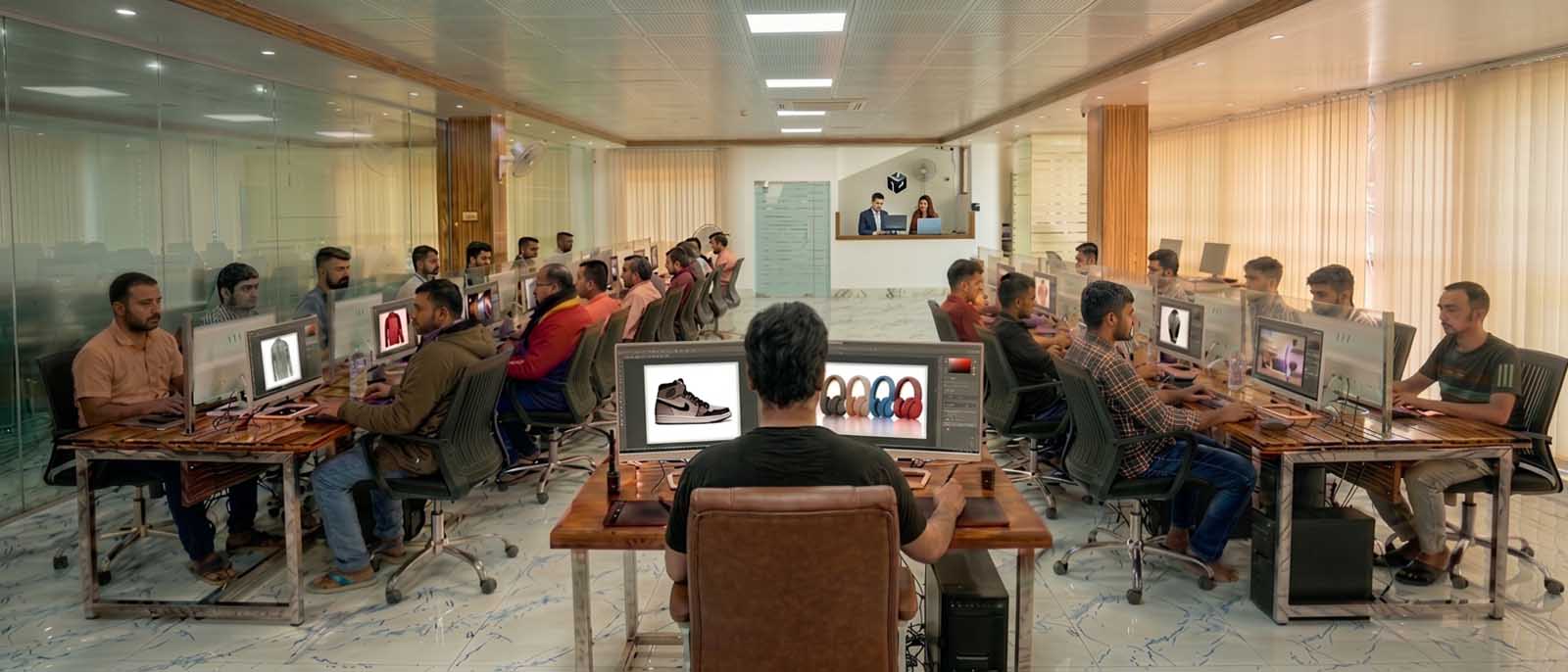
Client-facing offices and support run from the United States, the United Kingdom and Australia. All editing is produced in the Dhaka facility.
A water-damaged photograph rebuilt with a second reference
[Client name] sent a single [decade, for example 1940s] family photograph with water damage across [description of the damaged area], the only surviving copy. Clipping Path Center rebuilt the structural damage from the surviving image, used a second photograph of the same person supplied by the family to reconstruct the affected face rather than guessing at it, and returned the restored file with a note on which areas were rebuilt. [Client reaction or outcome, in their words if they gave permission.]
“[Client quote — one or two sentences in the client’s own words.]”
[Client name or description], [job title] · [Month Year]

Photo restoration prices, per photograph
Restoration is priced per photograph rather than per image, because the work follows the damage and no two damaged prints are alike. Send the scan for a firm figure.
| Level | What falls into it | Price |
|---|---|---|
| Light restoration | Surface scratches, dust, minor fading, light stains | From $1.19 |
| Standard restoration | Tears and creases, significant fading, water stains, mould | Quoted per photograph |
| Heavy reconstruction | Missing areas rebuilt, extensive facial damage repaired | Quoted per photograph |
| Colourisation | Black-and-white or sepia colourised, researched to period | Quoted per photograph |
Prices are quoted in US dollars per image and are current as of 10 August 2026. Volume above [minimum monthly volume] images per month moves into a discounted tier.
Who checked this page

Salim Ahmed
Salim Ahmed runs the production floor at Clipping Path Center in Dhaka, where he has worked in image post-production since 2008. He sets the quality-control standard every delivered file is measured against and personally reviews escalated photographic restoration and historical image reconstruction work.
Photo restoration: questions families and archivists ask
What is photo restoration?
Photo restoration is the digital repair of a damaged photograph. It covers tears, creases, scratches, water stains, mould, fading and colour shift, and the reconstruction of areas that have been lost. The work happens on a scan and the physical photograph is never altered.
Do I have to post you my original photograph?
No, and you should not. All work happens on a digital scan you send. Nothing physical is handled, which removes the largest risk in restoration: losing an irreplaceable original in transit.
How should I scan the photograph?
Use a flatbed scanner at 600 dpi or higher, 1200 dpi for a small or badly damaged print, save as TIFF or maximum-quality JPEG, and scan in colour even if the print is black and white. Do not clean, flatten or tape the original first.
Can you repair a photograph that is torn in half?
Yes. Scan both pieces as they are and they are rejoined digitally. There is no need to tape them, and taping causes permanent damage to the original.
Can you rebuild a face that is missing?
Partially, and honestly. A damaged face is rebuilt from the undamaged half and from any other photograph of the same person you can send. Without a reference, extensive facial reconstruction is invention rather than restoration, and we will tell you that and offer to leave the area instead of guessing at a likeness.
Can you colourise a black-and-white photograph?
Yes, with the caveat that black-and-white film recorded no colour, so colourisation is always interpretation. It is researched against period materials and dates where possible, and anything you remember about the real colours is more useful than any research we can do.
Will you tell me what was rebuilt?
Yes. Anything reconstructed rather than recovered is noted on delivery. A restored photograph should not quietly become a different photograph, and on family and archive material that distinction matters.
How long does it take?
Typically 48 to 72 hours, depending on the extent of the damage. Heavy reconstruction takes longer and we will give you a date rather than a range once we have seen the scan.
Will you use my family photograph as a sample?
Not without your written permission. Restoration material is personal, and every file is covered by an NDA as standard.
How much does restoration cost?
From $1.19 per photograph for light work such as scratches, dust and minor fading. Tears, water damage, heavy reconstruction and colourisation are quoted per photograph, because the work follows the damage. Send the scan and you will get a firm figure.
More answers on the Clipping Path Center FAQ page.
Send two images. See the work first.
Send one scan and anything you know about the photograph. You will get an honest assessment of what can be recovered before you pay for anything.
Two free sample images · No card required · No minimum order