
Sunglass Photo Editing Service
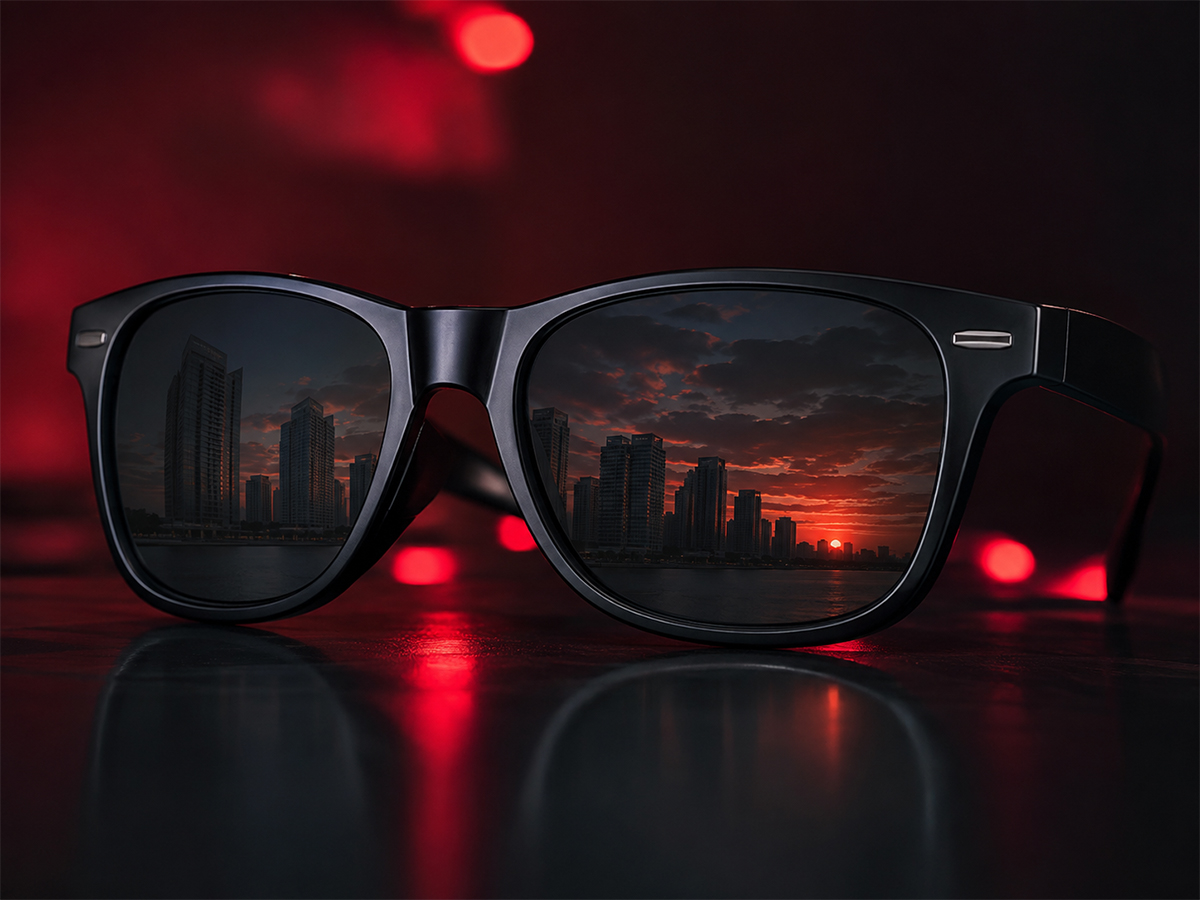
Sunglasses are two mirrors on a frame, and the single thing a buyer wants from the photograph is what the world looks like through them. Clipping Path Center controls lens reflections without flattening the curve, keeps the tint and transparency true, and cuts the frame including the gap behind every temple.
- Founded 2008 · 15+ years
- 150+ in-house editors
- Hand-edited, human QA
- NDA on every file
- No minimum order
Sunglass photo editing at Clipping Path Center: the specification
| Service | Sunglass and eyewear editing — reflection control, lens tint, frame colour, silo, shadow |
|---|---|
| Method | Hand-retouched in Adobe Photoshop; lenses masked separately from frames |
| Standard turnaround | 24 hours; 48 hours for mirrored and gradient lens rebuilds |
| Price | From $0.39 per image; mirrored and gradient lens work quoted per image |
| Minimum order | None. A single style or a full seasonal range. |
| Typical set | 4 to 6 angles per style: front, three-quarter, side, folded, detail, on-model |
| Files accepted | JPEG, PNG, TIFF, PSD, RAW |
| Files delivered | JPEG or transparent PNG at your platform dimensions, plus layered PSD on request |
| Lens handling | Transparency preserved, or lenses delivered on their own layer for later change |
| Colour reference | A physical sample or a stated frame and lens colour value |
| Revisions | Free until the file matches your written specification |
| Confidentiality | NDA on every file; encrypted FTP and SFTP transfer |
Specifications current as of 10 August 2026.
Curve kept, studio removed
The softbox and the photographer come off the lens. The gradient highlight that shows the lens is curved rather than flat stays, because without it eyewear photographs as cardboard.
Tint true, transparency real
A brown lens that photographs grey is a return. Tint density and the transparency through the lens are corrected to the physical product, not made dramatic.
The silo includes the temple gap
The space between the temple arm and the frame front is a thin negative shape that automated cut-outs consistently fill in. It is drawn by hand here.
What is sunglass photo editing?
Sunglass photo editing is the post-production of eyewear photography for listings, lookbooks and campaigns. It covers reflection control on curved lenses, lens tint and transparency correction, frame colour matching across acetate and metal, dust and fingerprint removal, hand-cut silos including the temple gaps, and a grounding shadow.
Eyewear sits in an unusual position commercially. The frame is the product, but the lens is the experience being sold, and the two need opposite treatment in the photograph. The frame has to read as a solid material with accurate colour. The lens has to read as transparent, tinted to the correct density, and curved.
That tension is why eyewear retouching goes wrong in a predictable way. Removing all the lens reflection makes the lens read as an opaque coloured panel and the frame as a flat cut-out. Leaving the reflection alone hides the tint entirely behind an image of the studio. The work is finding the balance in between, per lens type.
Lens types and what each one needs
Every eyewear range carries several lens types, and they are not interchangeable in post-production. Ordering them as one line item is where budgets go wrong.
| Lens type | What the photograph has to show | Reflection treatment | Difficulty |
|---|---|---|---|
| Solid tint | Even tint density and true colour | Reduce to a single soft highlight | Standard |
| Gradient | The gradient direction and where it fades | Preserve the fade, remove the studio | Moderate |
| Mirrored | The mirror finish and its colour shift | Rebuild the reflection entirely | High |
| Polarised or photochromic | Tint at the state it was photographed in | Standard, plus a note on the listing | Moderate |
| Clear or optical | That the lens is genuinely clear, plus the frame behind it | Near-total removal, keep edge refraction | Moderate |
Mirrored lenses are the expensive case and the reason is worth knowing before you quote a range. A mirror shows the studio by definition, so the reflection cannot be reduced — it has to be replaced with a plausible one that carries the correct colour shift across the curve. That is a rebuild, not a cleanup. See how constructed elements are built.
How Clipping Path Center retouches eyewear
Four operations run on a typical front-on shot, with the lens and the frame treated as separate objects throughout.

Lens reflection control
The softbox, the photographer and the room come off the lens surface. A single soft gradient highlight is kept, positioned to describe the curve of the lens. Remove that as well and the lens reads as a flat coloured panel glued to the frame, which is the most common failure in eyewear listings.

Tint density and transparency
Tint colour and density are matched to the physical lens, and the transparency is kept so the frame rim and hinge are faintly visible through it. Browns photographing as grey and greens as blue are the usual failures. Where you want lens colour changed later, lenses are delivered on their own layer so the change is a single edit.

Frame colour and micro cleanup
Acetate carries depth and often a tortoiseshell or laminated pattern that has to survive cleanup; metal carries brushed and polished zones and a plating tone. Dust, fingerprints and polishing residue are removed individually. Frame colour is matched to a physical sample, since acetate colourways shift markedly under studio light.

Silo through the temple gap
The frame is cut by hand, including the thin negative space between the temple arm and the frame front, the hinge gaps and the space under the nose bridge. A contact shadow is then built matching the original light so the pair sits on the white. Where lenses stay transparent in the delivered PNG, the alpha channel is built to carry that.
What an eyewear listing image has to satisfy
Eyewear is bought on colour and on what the lens does, and both are decided from the photograph alone.
| Requirement | What it means in practice | What it prevents |
|---|---|---|
| Main-image background | Pure white, RGB 255,255,255 | Marketplace rejection of the listing |
| True lens tint | Colour and density matched to the physical lens | Returns where the tint is not what the buyer expected |
| Visible transparency | Frame rim faintly readable through the lens | A lens reading as an opaque painted panel |
| Preserved curvature | One soft highlight retained per lens | Eyewear photographing as a flat cut-out |
| Accurate frame colour | Acetate and metal matched to a physical sample | Tortoiseshell and laminate colourways arriving wrong |
| Complete silo | Temple gap, hinge gaps and nose bridge cut | A cut-out that fails on a white background |
| Consistent scale | Every style filling the frame to the same proportion | A range page assembled from mismatched shots |
| Honest lens state | Photochromic and polarised shown as photographed | Implying a lens state the product does not hold |
Marketplace background values follow Amazon’s published product image requirements in Seller Central, checked 10 August 2026. Clipping Path Center does not deepen or dramatise lens tint beyond the physical product: tint density is the single most return-generating attribute in eyewear, and exaggerating it costs more than it sells.

Who orders sunglass photo editing
Eyewear brands
Launch sets where every colourway of one frame has to read as the same shape.
Optical and eyewear retailers
Consistent imaging across a multi-brand range shot at different studios.
Marketplace sellers
White-background silos with the temple gap cut, that clear review first time.
Fashion and accessory brands
Seasonal accessory lines retouched to the same standard as the main range.
How an eyewear editing job runs
Eyewear ranges repeat by colourway and lens type, so the reference style is chosen to cover the hardest lens in the range.
Send one style
Upload the full angle set for a single style, ideally one with the most difficult lens in the range. It is edited free, under NDA.
Agree the range specification
We confirm the angle set, lens treatment per lens type, background, colour reference method, whether lenses stay on their own layer, and output dimensions, then quote against it.
Retouch and check
Editors treat lens and frame as separate objects on separate layers. Quality control checks tint density and transparency against the reference sample, not by eye.
Deliver on a range schedule
Files return within 24 hours, or 48 hours where mirrored lenses need rebuilding, to an agreed daily volume across a season.
Who edits your images, and where
Lens work is the part of eyewear retouching that separates an experienced editor from an inexperienced one, because both the over-corrected and the under-corrected result look deliberate. These are the facts about the team.
Year Clipping Path Center was founded. Fifteen-plus years of continuous production work sit behind the current process.
In-house editors on the production floor in Dhaka, Bangladesh. No freelancer marketplace and no rotating contractors.
Quality-control passes before delivery: editor self-check, dedicated QA against your written specification, and a final pre-delivery review.
Zoom level editors work at when tracing edges with the Photoshop pen tool. Path accuracy is judged at that magnification, not at fit-to-screen.
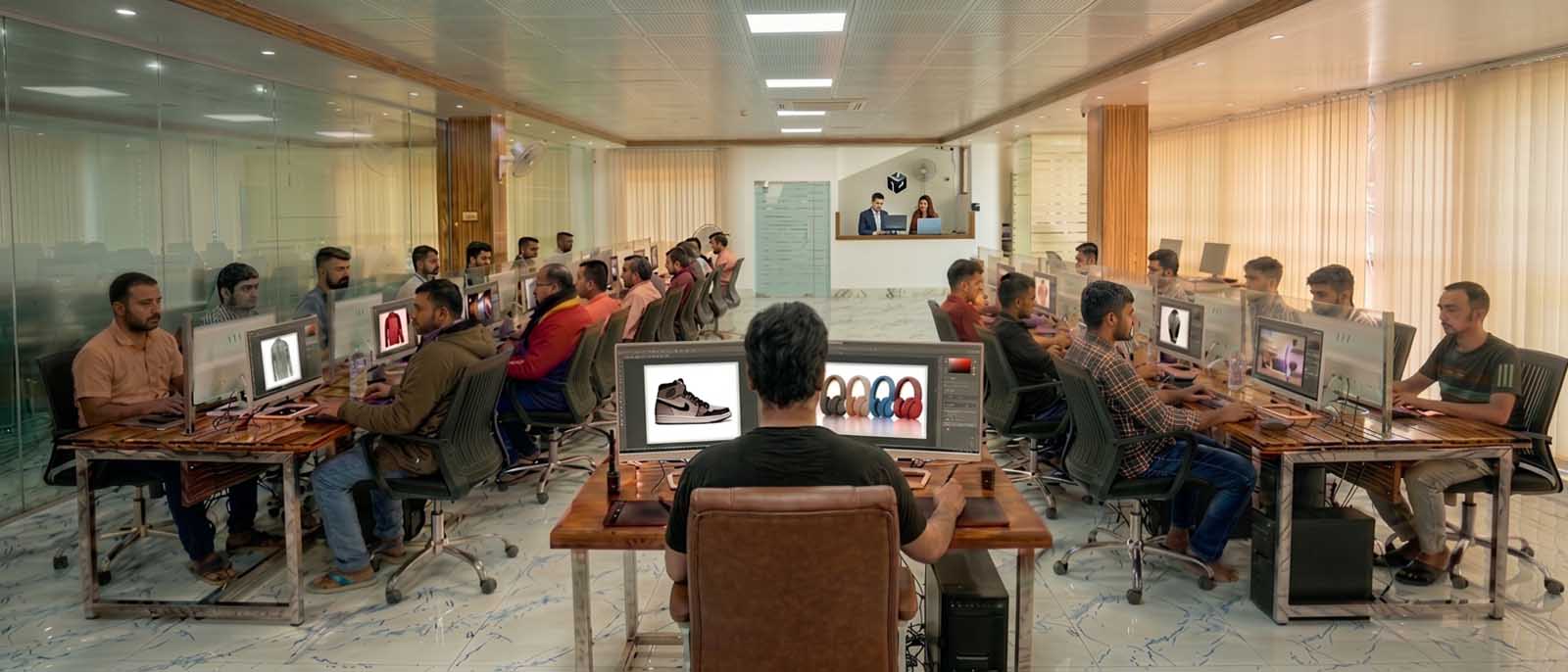
Client-facing offices and support run from the United States, the United Kingdom and Australia. All editing is produced in the Dhaka facility.
One range, five lens types, one standard
LuxOptics, an eyewear brand or optical retailer, listed 241 styles spanning solid, gradient and mirrored lenses, photographed across 06 sessions, so lens treatment varied noticeably down a single category page. Clipping Path Center set the treatment per lens type from one reference style, then brought 05 images to it, delivering lenses on their own layer so colourway variants could be produced without a reshoot. Tint-related returns fell from 9% to 3%.
“The consistency across our whole catalog finally matches the quality of the product itself. We stopped worrying about mismatched lens tones between shoots. ”
Sarah Bennett, E-commerce Manage · 2024

Sunglass photo editing prices, per image
Eyewear is priced by lens type and cut complexity. A solid-tint acetate frame and a mirrored metal aviator are different jobs on the same shelf.
| Type of work | What falls into it | Price per image |
|---|---|---|
| Basic eyewear edit | Solid-tint lens, silo cut, white background, crop and colour | From $0.39 |
| Lens and frame cleanup | Dust, fingerprints and polishing residue removed, tint corrected | From $0.49 |
| Gradient and mirrored lens | Reflection rebuild carrying the correct colour shift across the curve | Quoted per image |
| Range set | Every angle per style across a range, with lenses on their own layer | Quoted per range |
Prices are quoted in US dollars per image and are current as of 10 August 2026. Volume above [minimum monthly volume] images per month moves into a discounted tier.
Who checked this page

Salim Ahmed
Salim Ahmed runs the production floor and everything at Clipping Path Center in Dhaka, where he has worked in image post-production since 2008. He sets the quality-control standard every delivered file is measured against and personally reviews escalated eyewear retouching, lens reflection control and tint accuracy work.
Sunglass photo editing: questions eyewear sellers ask
What is sunglass photo editing?
Sunglass photo editing is the post-production of eyewear photography for listings and campaigns. It covers reflection control on curved lenses, lens tint and transparency correction, frame colour matching, dust and fingerprint cleanup, hand-cut silos including the temple gaps, and a grounding shadow.
Can you remove reflections from the lenses?
Yes, but not all of them. The softbox, the photographer and the room are removed while one soft gradient highlight is kept to describe the curve of the lens. Removing every reflection makes the lens read as a flat coloured panel glued to the frame.
Will the lens tint be accurate?
Yes. Tint colour and density are matched to the physical lens rather than made dramatic. Browns photographing as grey and greens as blue are the usual failures under studio light, and tint is the single most return-generating attribute in eyewear.
Can you keep the lenses transparent?
Yes. Transparency is preserved so the frame rim and hinge stay faintly visible through the lens, and where you need a transparent PNG the alpha channel is built to carry it. Lenses can also be delivered on their own layer so a colour change later is a single edit.
Can you handle mirrored lenses?
Yes, and it is the most involved lens type. A mirror shows the studio by definition, so the reflection is replaced rather than reduced: a plausible reflection is built carrying the correct colour shift across the curve. That is quoted separately from solid-tint work.
Can you change the lens colour?
Yes. If lenses are delivered on their own layer, a colourway variant is a single edit rather than a reshoot, which is how most brands produce a full tint range from one photographed sample.
Why do automated cut-outs fail on sunglasses?
The temple gap. The thin negative space between the temple arm and the frame front, along with the hinge gaps and the space under the nose bridge, is exactly the shape an algorithm fills in. It is drawn by hand here.
Will the images meet Amazon’s requirements?
Silos are delivered on a pure white RGB 255,255,255 background, which is the value Amazon specifies for a main product image. Frame fill and output dimensions follow your written specification, so state the platform when you order.
How fast is delivery?
Standard turnaround is 24 hours. Mirrored and gradient lens rebuilds run to 48 hours. Range work runs to an agreed daily volume across a season.
How much does sunglass photo editing cost?
From $0.39 per image for a solid-tint lens with silo, background and colour, and from $0.49 with lens and frame cleanup. Gradient and mirrored lens work is quoted per image because the reflection is rebuilt rather than reduced.
More answers on the Clipping Path Center FAQ page.
Send two images. See the work first.
Send one style, ideally with the hardest lens in your range. It comes back retouched, free.
Two free sample images · No card required · No minimum order